In this guide
You saved up to build a PC. You dig out a recommended build from a few months ago, look up the parts, and the total barely resembles the original budget. The graphics card is expensive. So is the RAM. Even the SSD, once a fairly straightforward purchase, forces you to rethink the cart.
In 2026, several costs are rising at the same time. Pressure on RAM, storage and graphics cards makes buying a new desktop particularly frustrating. Some buyers are going back to DDR4 builds just to stay within budget.
Artificial intelligence explains part of this. To understand the bill, it helps to look at what data centers are buying, where manufacturers are directing production, and what actually reaches stores.
Your PC’s memory is competing for manufacturers’ attention
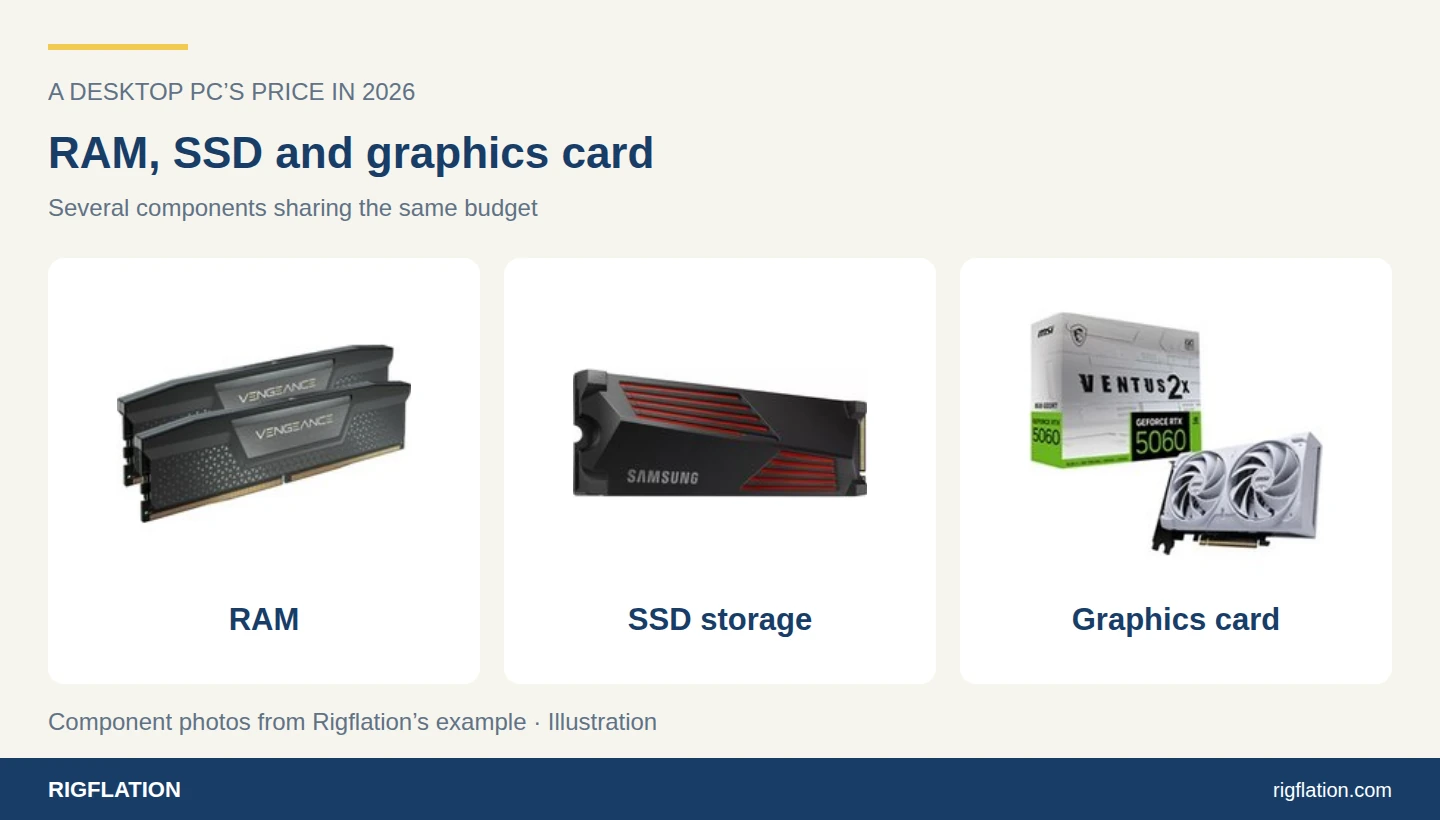
A PC uses several kinds of memory. RAM keeps data from open applications close at hand. An SSD stores your files and games when you switch the computer off. The graphics card has its own memory, usually called video memory or VRAM.
AI servers also need large amounts of memory and storage. These products are not all the same as the ones inside your desktop. A server chip does not directly replace a PC memory module. Manufacturers still have to decide where to put their production capacity and investment.
In its September 30, 2026 analysis, TrendForce describes DRAM production still focused on server applications and strong demand for enterprise SSDs. For the fourth quarter, it forecast another 10–15% rise in conventional DRAM contract prices and 15–20% for NAND, the flash memory used in SSDs. TrendForce analysis
Those percentages refer to industrial contracts, compared with the previous quarter. They do not mean every retail RAM kit must rise by the same amount. Between the chip and your cart come inventories, distributors, promotions and the retailer’s margin.
Cheaper inventory eventually runs out
Two stores can offer similar products at very different prices. One is still selling inventory bought before the increase. The other has just restocked at the new price.
Framework describes this timing difference in its pricing updates. The manufacturer explains that it had to raise prices on certain configurations and storage capacities after using up older, cheaper inventory. Framework on memory and SSD purchases
This helps explain why a good offer can disappear even though the product has not changed. The next delivery costs the seller more. That does not justify every asking price, but it accounts for some of the seemingly absurd differences between prices checked two weeks apart.
Graphics cards are getting more expensive too
The problem extends beyond RAM. In its August 31, 2026 report, TechSpot recorded another rise in graphics card prices across ten countries, with differences between brands and models. Its analysis connects memory pressure with GPU prices, without attributing the entire increase to one cause. TechSpot’s GPU pricing report
For a concrete example in euros, here are three observations from ComputerBase’s German market comparison. They are the lowest in-stock prices recorded on the dates shown, not US offers or prices guaranteed today.
| Graphics card | July 24, 2026 | October 2, 2026 | Calculated change |
|---|---|---|---|
| GeForce RTX 5060 | €289 | €430 | +€141, about +49% |
| GeForce RTX 5070 | €564 | €799 | +€235, about +42% |
| Radeon RX 9070 XT | €649 | €789 | +€140, about +22% |
Price source: ComputerBase’s graphics card price history table. Changes are calculated from those observations.

The increase also affects cards outside the highest price bracket. If the GPU has already taken another hundred euros from a German buyer’s budget, a further rise in SSD or RAM prices becomes hard to absorb.
The return to DDR4 is mainly a budget story
On Reddit, the author of “Building a PC with DDR4 in 2026” shares a build with a Core i5-13400F, 32GB of DDR4 and an RTX 5060 Ti 16GB. They say they chose a machine they could afford and are happy with their gaming experience.
Replies discuss the spending limit as much as the memory generation. Some defend DDR4. Others argue that the savings do not always justify an older platform. These are individual accounts with different prices and uses, but the dilemma is familiar: pay more for a newer platform, or keep that money for the graphics card?
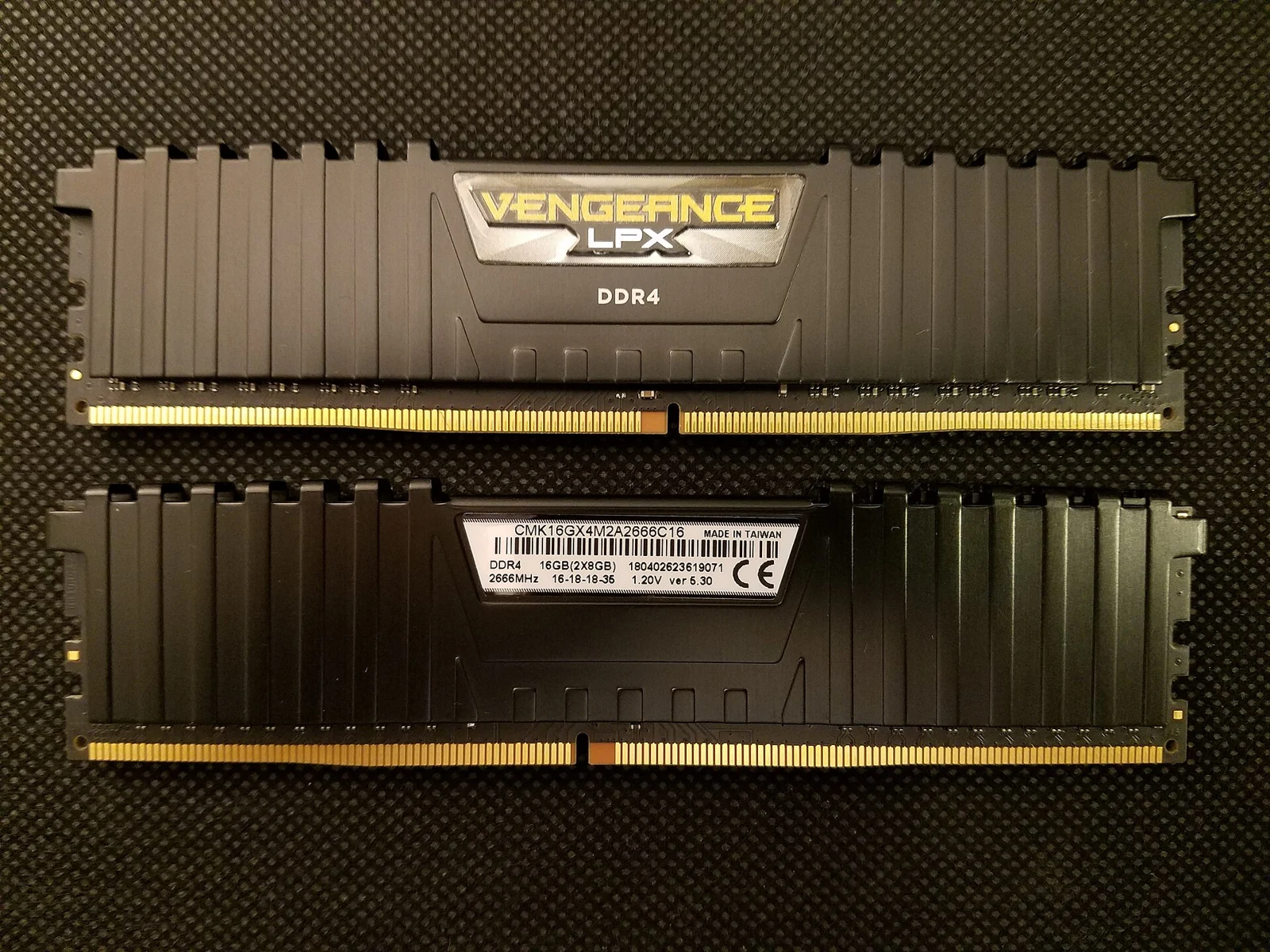
A DDR4 machine can still meet your needs. The savings depend largely on the combined CPU, motherboard and memory price, and on parts you already own. DDR4 has not escaped price increases either, as participants in this pricing discussion point out.
Check compatibility: DDR4 memory does not fit a DDR5 slot. The choice also affects the motherboard and CPU. Kingston’s explanation of DDR4 and DDR5 platforms
Manufacturers now forecast shortages through 2030
The year 2030 is no longer just a worried guess on a forum. In results published on October 28, 2026, SK hynix said memory demand could continue to exceed supply through 2030. The company points to AI demand, manufacturing complexity and the time required to build new facilities. SK hynix’s official statement

This industry forecast does not give a date when retail prices will fall. Nor does it say every component will become more expensive without interruption for four years. A model can get cheaper, a sale can appear and competition can change even while supply remains tight.
For buyers, the useful point is simpler: waiting a few weeks does not guarantee a return to earlier prices. Buying in a panic does not guarantee a bargain either.
Look at the whole cart before deciding
If you already have a desktop that meets your needs, higher component prices do not force you to do anything. You can keep using it. If you need to buy now, compare several complete builds and set an amount you are actually willing to spend.
A discounted RAM kit can lose its appeal if it leads you toward an expensive CPU or motherboard. The calculation needs to cover the whole machine.
You can also compare your PC’s exact parts in Rigflation. The result covers dated offers available for those same components. It describes the cost of buying those models again, without estimating your desktop’s resale value or measuring the entire market.
Read next: buying a desktop during this period and comparing a prebuilt with its components.